Today’s Connection Win
I’m absolutely beaming to share this win from Sheena, because it shows how small shifts in how we talk about friendship can create ripple effects across generations.
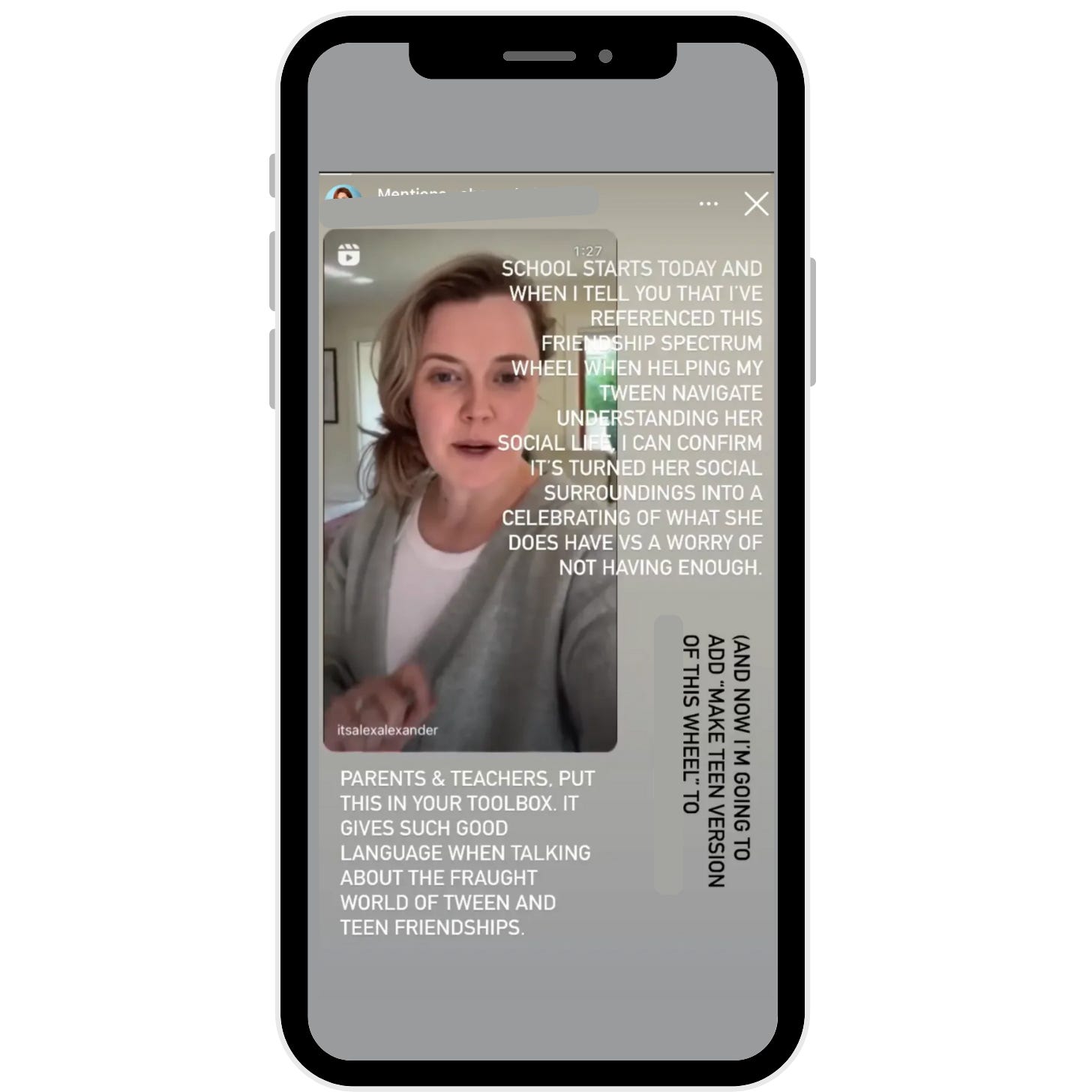
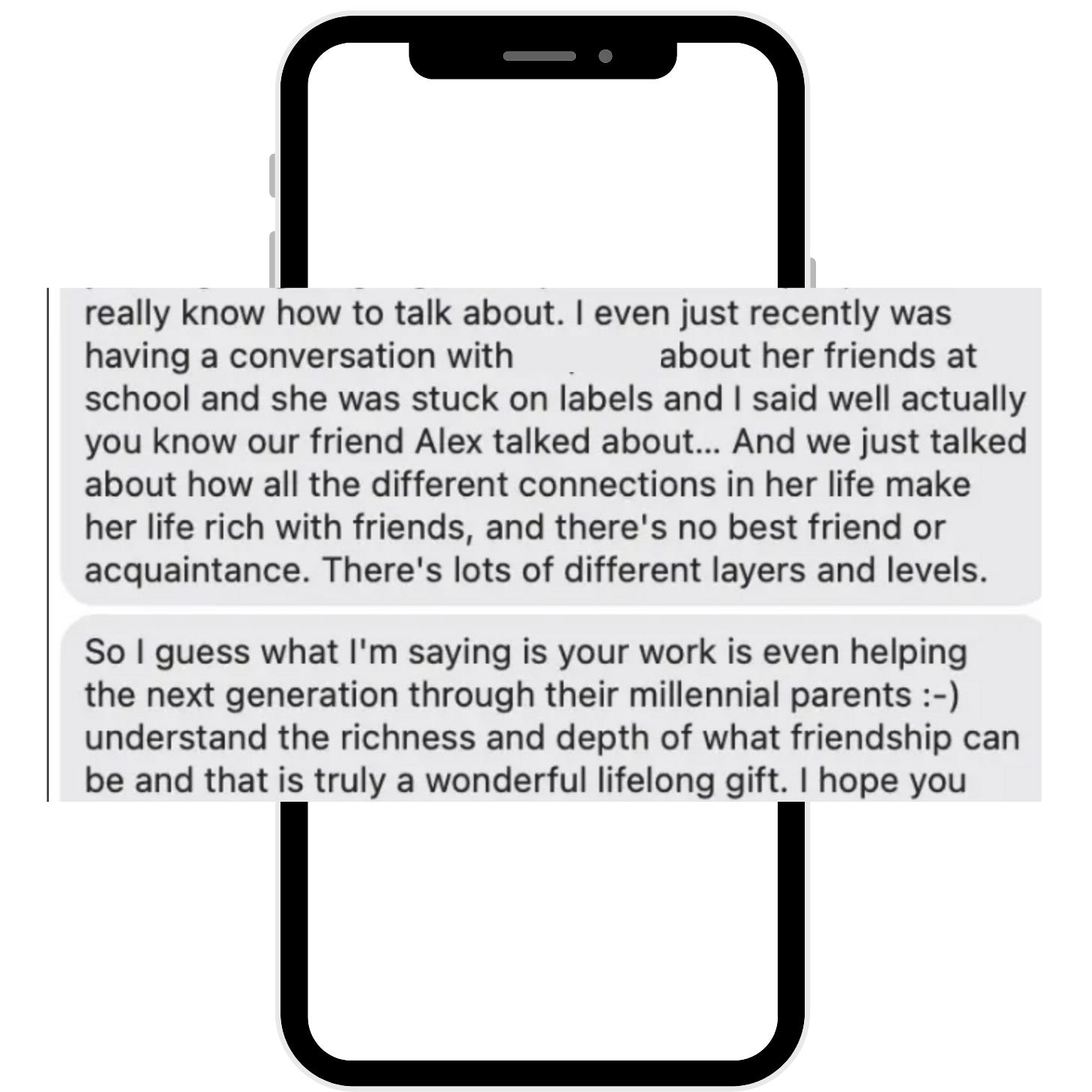
Here’s what happened: Sheena used the Wheel of Connection which shows the spectrum of friendship (you know, that wheel I’m always talking about) to help her tween daughter navigate her social world at school. Instead of getting caught up in the usual “best friend” labels and what she might be missing, they had this beautiful conversation about how different types of connections make life richer. And get this - her daughter totally got it! She started seeing her social circle not as a hierarchy of best friends versus everyone else, but as this wonderful mix of different kinds of connections.
From Hierarchy to Web
What I love about Sheena’s approach with her daughter is that when we switch from thinking of friendship as a hierarchy to a web of connections of varying levels, it just makes friendship more possible (Sound familiar? It should!… Wheel of Connection Framework.)
Think about it - there’s that statistic that says it takes about 60 hours to make a casual friend and 100 to be considered a friend, and 200 to become a close friend . But here’s the thing: it’s really hard to find 60 hours with one person, especially as adults with jobs and families and responsibilities - let alone 200!
But what if you’re already living your life with a few people that you find great, and you only have 10 hours with each of them? Suddenly, they can become defined friends in those specific areas where you actually really need people to support you. Isn’t that worthwhile?
Why “Best Friend” Thinking Limits Us
I don’t think the “best friend” focus is necessarily harmful, but it gives the impression that it’s better than other types of connections, and that’s just not true. Your workout buddy who motivates you every Tuesday morning? That’s valuable. Your neighbor who always checks in when you’re having a rough week? That’s meaningful. Your coworker who makes you laugh during stressful projects? That connection matters.
When we get stuck in that all-or-nothing mindset: we miss out on so many beautiful, supportive connections because they don’t fit the “best friend” mold. We dismiss relationships that could actually enrich our lives in really specific, important ways.
And this idea that friendships can only ever get better, or that it takes these big, dramatic actions to maintain them? That’s exhausting and it’s not true. In reality, friendship is just a bunch of little actions we weave into our life. The quick text, the invitation to run errands together, remembering what someone mentioned last week and following up.
Setting Kids Up for Success
What excites me most about parents like Sheena having these conversations with their kids is that you’re setting them up to have the skill set to build their own support system as they need it and as they grow. Instead of waiting around hoping for that one perfect “best friend” to appear, they’ll know how to recognize and nurture all the different types of connections that make life richer.
If we can teach kids early to build this wide web of connections to support all their various interests and needs, they’re set up for so much better success down the line.
That’s a gift that will serve them their entire lives.
Take This Further
Your Turn
I’m curious - do you remember feeling pressure about “best friends” when you were younger? And if you have kids now, how do you approach these conversations with them?
|